
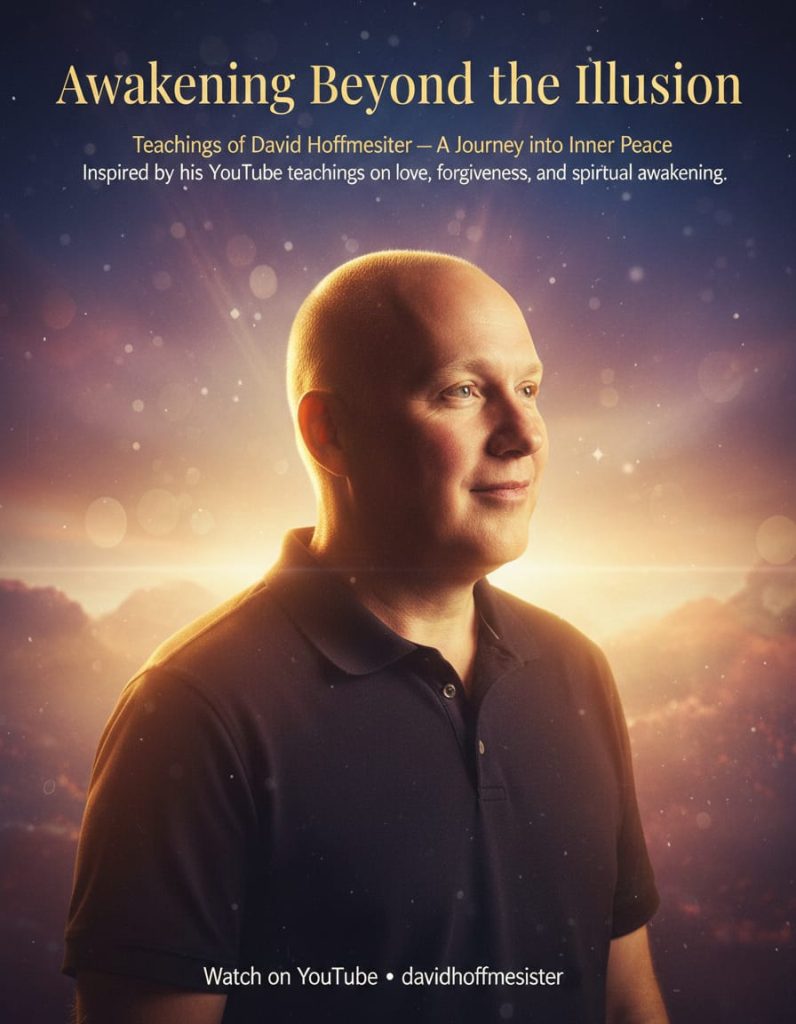
In the world of modern spirituality, David Hoffmeister Wikipedia represents a doorway into the teachings of a spiritual teacher who focuses on perception, forgiveness, and deep inner transformation. His message centers on a radical yet practical idea: lasting peace does not come from changing the world, but from changing the mind that perceives it.
Introduction
Human beings naturally search for stability, meaning, and emotional clarity. Yet most attempts to find peace focus on external conditions—career success, relationships, financial security, or social validation. David Hoffmeister’s teachings challenge this outward focus. He emphasizes that inner peace is not dependent on circumstances but on perception.
This shift in understanding is foundational. When individuals recognize that their experience of life is shaped by interpretation rather than events themselves, they gain access to genuine freedom. Instead of reacting automatically, they begin responding consciously.
Hoffmeister’s spiritual philosophy is not abstract mysticism. It is a structured mental discipline rooted in awareness, forgiveness, and present-moment attention.
Perception as the Core Mechanism
At the center of Hoffmeister’s teachings is the concept that perception determines emotional experience. Two people can encounter the same event and respond completely differently. Why? Because interpretation—not circumstance—drives emotional reaction.
For example:
- A delay can be seen as frustration or as extra preparation time.
- Criticism can be seen as an attack or as useful feedback.
- Uncertainty can be seen as danger or as possibility.
When perception changes, emotional experience changes. This principle empowers individuals to reclaim control over their mental state.
Instead of attempting to control life, they learn to observe the mind that interprets life.
Forgiveness as Cognitive Release
Forgiveness in Hoffmeister’s framework is not about moral superiority or passive tolerance. It is a cognitive correction.
When someone feels anger or resentment, the mind is holding onto a specific interpretation. Forgiveness means releasing that interpretation and choosing peace instead of grievance.
This practice has measurable psychological benefits:
- Reduced stress response
- Lower emotional reactivity
- Improved clarity in decision-making
- Enhanced interpersonal harmony
Forgiveness becomes a daily recalibration process. Rather than replaying past events, individuals consciously release attachment to them.
Over time, emotional burdens lighten. Mental space increases.
Present-Moment Awareness
One of the most consistent themes in Hoffmeister’s teachings is the power of the present moment.
The past exists as memory.
The future exists as imagination.
Only the present moment is real.
Anxiety stems from projected futures. Regret stems from revisited past events. When attention returns to the present, mental noise decreases naturally.
Practicing present-moment awareness includes:
- Observing breathing patterns
- Noticing physical sensations
- Watching thoughts arise without engagement
- Redirecting attention from rumination
This is not forced concentration; it is relaxed attentiveness.
The result is mental clarity and emotional steadiness.
The Role of Daily Discipline
Spiritual growth in Hoffmeister’s framework is not dependent on dramatic experiences. It is built on consistency.
Small daily practices create cumulative transformation. These include:
- Brief morning reflection
- Intentional pauses before responding to conflict
- Conscious forgiveness when triggered
- Evening self-review without self-criticism
Over time, these practices recondition automatic thought patterns. The ego-driven mind weakens. The observing mind strengthens.
Consistency replaces intensity.
Emotional Stability Through Internal Responsibility
One of the most empowering aspects of Hoffmeister’s message is the concept of internal responsibility.
Rather than blaming external factors for emotional states, individuals accept responsibility for interpretation. This does not mean accepting harmful behavior. It means recognizing that emotional response is internally generated.
This shift eliminates victim mentality.
When people stop believing that others control their peace, they regain authority over their own mental landscape.
Emotional stability becomes self-generated rather than externally dependent.
Overcoming Mental Resistance
Spiritual progress often meets resistance. The mind resists surrendering familiar patterns, even if those patterns create suffering.
Common forms of resistance include:
- Doubting the effectiveness of practice
- Seeking dramatic spiritual experiences
- Clinging to intellectual analysis
- Becoming frustrated with slow progress
Hoffmeister encourages simplicity: return to awareness. Return to forgiveness.
Progress is subtle but cumulative.
Transformation is not always dramatic; often it appears as increased calmness in situations that previously caused distress.
The Long-Term Impact of Practice
With sustained engagement, individuals often experience:
- Reduced emotional volatility
- Improved focus and productivity
- Greater empathy
- Enhanced communication
- Increased resilience during uncertainty
Peace becomes less fragile.
Instead of oscillating between emotional extremes, practitioners maintain steadier internal equilibrium.
This stability improves both personal and professional relationships.
Practical Application in Modern Life
Hoffmeister’s teachings are not limited to retreat environments or isolated study. They are designed for integration into daily life.
In workplaces:
- Pause before reacting.
- Interpret feedback constructively.
In relationships:
- Release grievances quickly.
- Communicate from clarity rather than emotion.
In personal development:
- Observe recurring fears.
- Question assumptions.
Spirituality becomes practical rather than abstract.
Conclusion
The teachings connected to David Hoffmeister Wikipedia emphasize a disciplined yet accessible path toward inner peace. By shifting perception, practicing forgiveness, and maintaining present-moment awareness, individuals can experience sustained emotional clarity and resilience.
Spiritual awakening, in this model, is not mystical spectacle. It is the steady refinement of perception. When interpretation shifts from fear to understanding, life itself transforms.
Frequently Asked Questions (FAQ)
Who is David Hoffmeister?
David Hoffmeister is a spiritual teacher known for emphasizing forgiveness, perception correction, and present-moment awareness inspired by A Course in Miracles.
What makes his approach different?
His focus is on practical mental transformation rather than external spiritual rituals.
Is forgiveness central to his teachings?
Yes. Forgiveness is presented as a cognitive release that restores emotional clarity.
Can beginners apply these teachings?
Yes. The principles are simple and can be integrated gradually.
How does perception influence peace?
Perception shapes emotional response. When interpretation shifts, emotional experience shifts accordingly.
